
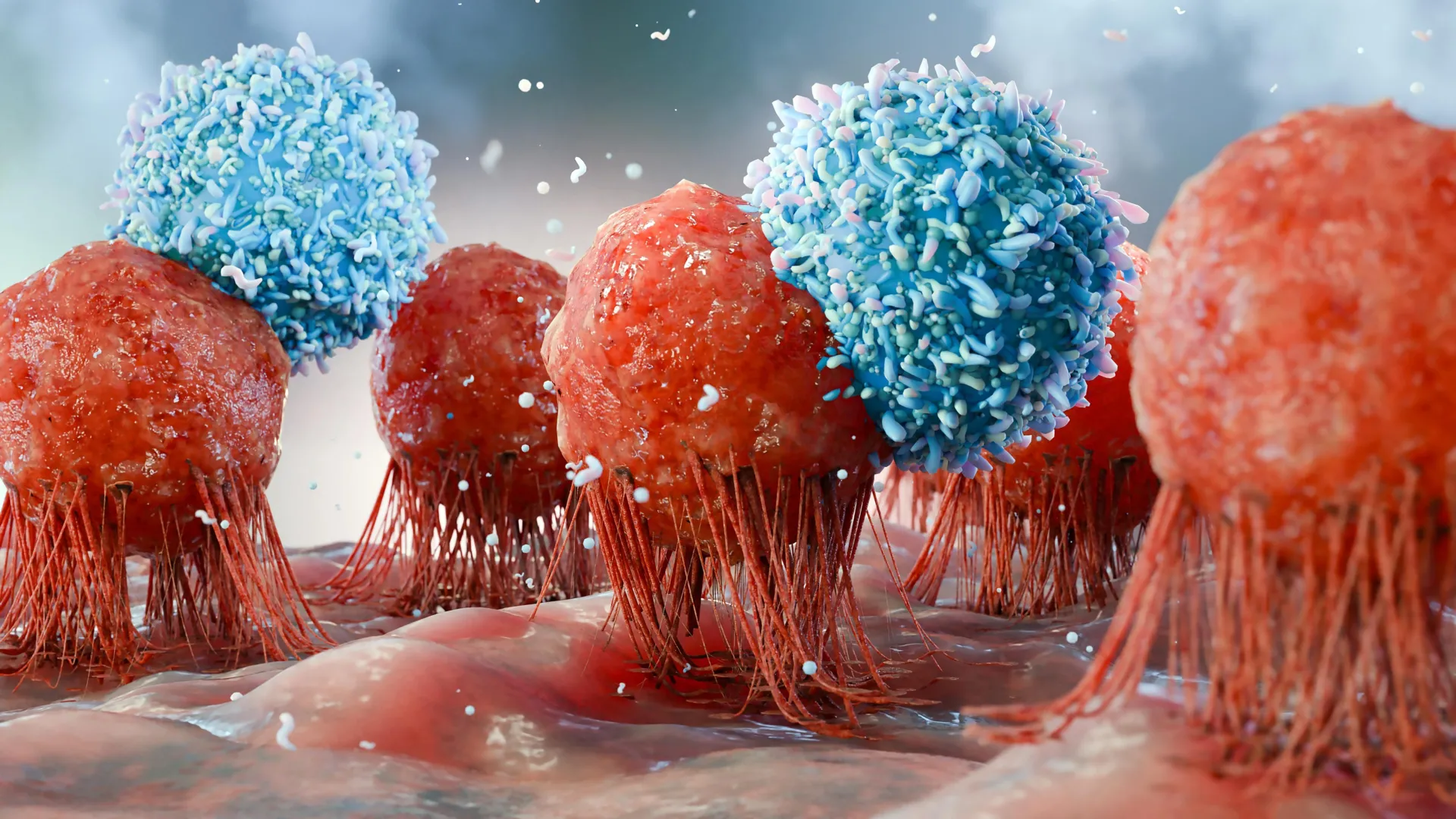
Researchers at Trinity College Dublin and University College Dublin (UCD) have found that a yeast-based dietary supplement can strengthen immune cells involved in fighting cancer in mice.
In experiments with obese laboratory mice, the researchers found that adding the supplement to the animals' diets changed the way immune cells developed and produced stronger cancer-fighting responses.
Obesity can interfere with immune function, making it more difficult for the body to respond effectively to tumors. The new findings suggest that a yeast-based supplement could potentially help restore some of that lost immune activity.
The research was published in the scientific journal Cell Reports. The study was led by Frederick Sheedy, Associate Professor in Immunology in Trinity's School of Biochemistry and Immunology, and Helen Roche, Professor in Nutrigenomics, UCD School of Public Health, Physiotherapy and Sports Science and Director of the UCD Conway Institute.
Training Immune Cells Through Diet
Dr. Anna Ledwith, postdoctoral researcher in Prof. Roche's group and first author of the research paper, said: "We wanted to investigate whether a common dietary supplement, yeast beta-glucan, could reprogram early-stage immune cells in the bone marrow to produce long-lasting, enhanced anti-tumor immune responses.
"Mice were fed a standard or high-fat diet supplemented with yeast beta-glucan for 4-12 weeks, and then their immune system was challenged by different types of cancer cells: colorectal, skin, and breast cancer. The study also tested whether yeast supplementation could overcome immune dysfunction caused by obesity and whether protective effects persist after weight loss."
The researchers wanted to determine whether consuming yeast beta-glucan could produce a form of lasting immune training by changing early immune cells in the bone marrow. They also examined whether the supplement could counter the immune problems caused by obesity.
Prof. Roche said the findings show for the first time that consuming yeast beta-glucan in the diet is enough to trigger trained immunity by altering bone marrow stem cells. Earlier studies achieved similar effects using injections.
Commenting on the significance of the findings, Prof. Roche added: "This is the first demonstration that dietary delivery of yeast beta-glucan is sufficient to induce trained immunity through reprogramming of bone marrow stem cells. Previous research required injections.
"Crucially, this dietary intervention restores anti-tumor innate immunity in obese mice and reverses long-term immune memory defects that persist even after weight loss, a major unmet clinical challenge."
Reversing Immune Problems Linked to Obesity
Obesity affects millions of people around the world and can significantly disrupt immune function, increasing susceptibility to both infections and cancer. These immune changes can continue even after a person loses weight.
That persistence is an important challenge because weight loss does not necessarily erase all of obesity's long-term effects on the immune system. In the mouse experiments, yeast beta-glucan helped reverse immune memory problems that remained after weight loss.
Cancer, meanwhile, continues to be one of the leading causes of death worldwide. Researchers are therefore looking for safe, widely available approaches that could help restore immune function and potentially work alongside existing cancer treatments.
Yeast beta-glucan is already sold as a dietary supplement and has a strong safety record. That makes it a practical candidate for future studies in people.
A Potential Addition to Cancer Treatment
Looking to the future, Professor Sheedy said: "This research paves the way for dietary intervention studies in people living with obesity, chronic infections and other immunocompromised populations. The yeast beta-glucan used, WellmuneTM, from Kerry Group, is already food-grade and commercially available, facilitating rapid clinical trials.
"Ultimately, a simple dietary supplement could help boost the immune system's cancer-fighting ability, complementing existing treatments such as chemotherapy and immunotherapy, with the potential to improve vaccine responses and resistance to infection."
The researchers say the findings could now support dietary intervention studies involving people with obesity, chronic infections, and other conditions associated with weakened immune function.
Because the specific yeast beta-glucan used in the study is already commercially available as a food-grade supplement, researchers believe it could move relatively quickly into clinical testing. Future studies will need to determine whether the immune benefits seen in mice can also be reproduced in humans.
Story Source:
Materials provided by Trinity College Dublin. Note: Content may be edited for style and length.
Journal Reference:
- Anna E. Ledwith, Hannah Prendeville, Cian JH. Horneck Johnston, Stephen P. Cunningham, John P. McGrath, Carrie Corkish, Aaron M. Walsh, Fatma Koc, Hugo Charles-Messance, Vasile Mihai Sularea, Caitlín Ní Chasaide, Heike C. Hawerkamp, David K. Finlay, Lydia Lynch, Kingston H.G. Mills, Catherine Stanton, Helen M. Roche, Frederick J. Sheedy. Yeast β-glucan supplementation supports immunometabolic anti-tumor responses and reverses obesity-induced dysfunction via trained hematopoiesis. Cell Reports, 2026; 45 (7): 117648 DOI: 10.1016/j.celrep.2026.117648
Cite This Page:
Trinity College Dublin. "This yeast supplement may boost cancer-fighting immunity." ScienceDaily. ScienceDaily, 22 August 2026. . Trinity College Dublin. (2026, August 22). This yeast supplement may boost cancer-fighting immunity. ScienceDaily. Retrieved August 24, 2026 from www.sciencedaily.com/releases/2026/08/260821012230.htm Trinity College Dublin. "This yeast supplement may boost cancer-fighting immunity." ScienceDaily. www.sciencedaily.com/releases/2026/08/260821012230.htm (accessed August 24, 2026).Explore More
from ScienceDaily RELATED STORIES Blocked Blood Flow Makes Cancer Grow Faster Sep. 11, 2025 Researchers at NYU Langone Health discovered that cutting off blood flow accelerates cancer growth by prematurely aging the bone marrow and weakening the immune system. In mouse models, restricted ... Is Long-Term Beta-Blocker Therapy Needed After a Heart Attack? Aug. 30, 2024 The appropriate duration of beta-blocker treatment after a heart attack (a myocardial infarction [MI]) is unknown in patients who do not need to take beta-blockers for another reason. In the ABYSS ... Metabolite Product from Pomegranate: Researchers Identify Way to Boost Tumor-Fighting Immune Cells Oct. 26, 2022 Researchers have succeeded in identifying a new approach for the therapy of colorectal cancer. In preclinical models and studies on human immune cells, they found that urolithin A, a metabolite ... Heterogeneous Development of Beta-Cell Populations in Diabetes-Resistant and -Susceptible Mice Aug. 31, 2022 Progressive dysfunction and failure of insulin-releasing beta-cells is a hallmark of type 2 diabetes (T2D). Researchers have now shown that diabetes-resistant and -susceptible mice respond ... Most People With Prior SARS-CoV-2 Infection or Vaccination Have T Cell Immune Responses Against Omicron Variant Despite Low Antibody Responses Feb. 9, 2022 Even though the Omicron variant of SARS-CoV-2 can escape antibody responses, T cell immune responses are still robust against the variant in most individuals with prior SARS-CoV-2 infection or ... Obesity Raises the Risk of Gum Disease by Inflating Growth of Bone-Destroying Cells Nov. 12, 2021 Chronic inflammation caused by obesity may trigger the development of cells that break down bone tissue, including the bone that holds teeth in place, according to new research that sought to improve ... TRENDING AT SCITECHDAILY.comDogs and Humans May Share a Surprising Biological Secret to Longevity
Cleaner Cars May Be Hiding a New Pollution Problem
Scientists Uncover Signs of an Ancient Climate “Tipping Point”
236-Million-Year-Old Fossil Reveals a Stunning Secret About the Origins of Mammal Birth
Print Email ShareBreaking
this hour- Common Drugs May Change Your Gut for Years
- Your Bird Feeder Could Spread Bird Flu
- Ghostly Star Stream Maps Dark Matter
- A Sleep Sweet Spot for Slower Aging
- Screen Time at Ages 1 and 6 Matters
- Mapping a Molecule’s Quantum Shape
- NASA’s Roman Telescope Is Ready to Launch
- Artemis II Astronauts Earn Major Honor
- Tiny New “Dragon” Discovered in Thailand
- Alzheimer’s Gene May Shrink Neurons
Trending Topics
this week HEALTH & MEDICINE Personalized Medicine Pharmacology Nutrition MIND & BRAIN Perception Learning Disorders Behavior LIVING & WELL Nutrition Behavior Skin CareStrange & Offbeat
HEALTH & MEDICINE Common Medications May Change Your Gut for Years This Shark Can Live 400 Years. Its Eyes Barely Seem to Age Tooth Count May Predict Survival After Pancreatic Cancer Surgery MIND & BRAIN Mysterious Waves Sweeping Across Your Brain May Help Turn Sensory Chaos Into What You See Ozempic May Have Revealed the Brain’s Hidden “craving Center” The Adult Brain Can Repair Itself Better Than Scientists Thought LIVING & WELL This Gut Microbe May Help Keep You Strong as You Age COVID-19 Awakens Dormant Viruses — and One Is Linked to Long COVID When Gut Microbes Run Low on Fiber, They May Start Eating You\n