
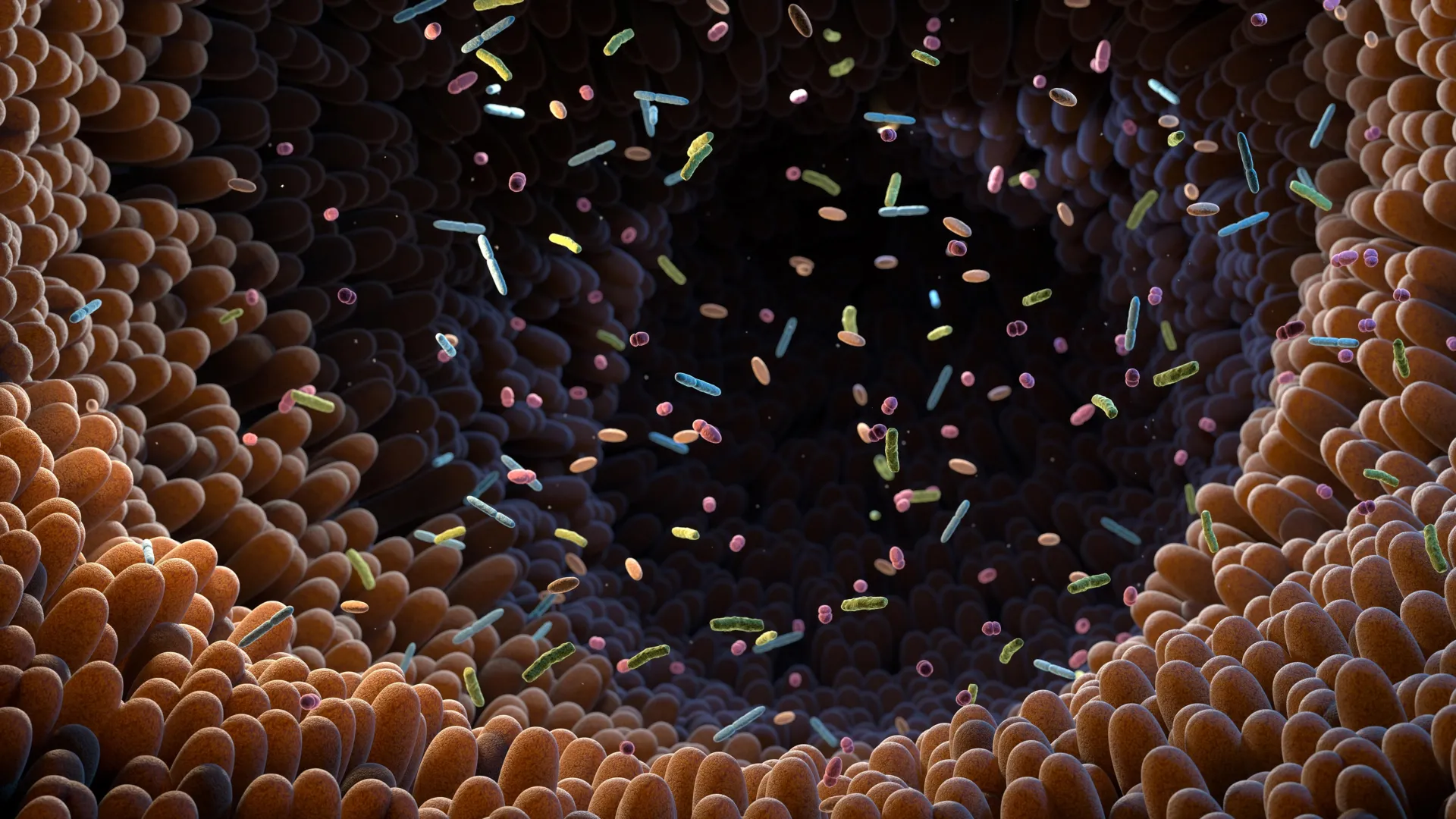
Researchers at Karolinska Institutet have found that gut microbes can transform nitrate and iron from food into molecules that may help protect against cardiovascular and metabolic disease. The findings, published in Cell, uncover a previously unknown way the gut microbiota may influence important functions throughout the body.
Nitrate is found naturally in many vegetables, especially beetroot and leafy greens such as spinach, rocket, and lettuce. Non-haem iron -- the form of iron found in plant-based foods such as beans, whole grains and green vegetables -- is also a common part of the diet.
The researchers found that gut bacteria can combine nitrate and non-haem iron from food to produce compounds known as dinitrosyl iron complexes (DNICs). After they are formed, these molecules can be absorbed into the body and carried to different organs, particularly the liver and kidneys.
Gut Microbes Are Essential for DNIC Formation
The study drew on experiments involving mice, cells, bacteria and human samples. Using advanced analytical techniques, the researchers detected DNIC in several types of tissue.
They also found that DNIC molecules were completely absent in germ-free mice. That result suggests that gut microbes play an essential role in producing them.
"Our results show that gut bacteria can convert components in food into biologically active molecules that influence important bodily functions," says Andrei L. Kleschyov, Senior Researcher at the Department of Physiology and Pharmacology, Karolinska Institutet, the study's first and co-corresponding author.
Higher DNIC Levels Improved Key Health Markers
The researchers then tested what happened when DNIC levels were increased. They did this either by giving dietary supplements containing nitrate and iron or by administering synthetically produced DNIC.
In an animal model of cardiovascular and metabolic disease, higher DNIC levels were associated with improvements in several measures of health.
"Among other things, we observed lower blood pressure and improved vascular function, better blood sugar control and reduced fat accumulation in the liver. The results help to explain why a diet rich in vegetables, which contain both nitrate and iron, is linked to a lower risk of several diseases," says Mattias Carlström, Professor of Cardiorenal Physiology at the Department of Physiology and Pharmacology, Karolinska Institutet, one of the study's shared last authors together with Professor Jon Lundberg at the same department, and co-corresponding author.
A Possible Link Between Vegetables and Disease Protection
According to the researchers, the results reveal a previously unknown mechanism through which diet and specific gut bacteria may work together to support health.
The findings could also help explain why diets rich in vegetables are associated with a lower risk of cardiovascular and metabolic diseases. However, the researchers caution that much of the work was carried out in experimental models, so additional research will be necessary to determine exactly how the process operates in humans.
Researchers Now Want to Study DNIC in Humans
The next goal is to develop reliable ways to measure DNIC levels in people. Researchers also want to learn more about how the molecules are produced, how they move through the body, and how they influence different physiological processes.
Another major question is whether diet or changes to the gut microbiota could be used to alter DNIC levels and potentially help prevent disease.
The study was carried out in collaboration with the University Medical Centre Hamburg-Eppendorf and the Johannes Gutenberg University Medical Centre Mainz in Germany. The research was funded by, amongst others, the Swedish Research Council, the Swedish Heart-Lung Foundation, the Novo Nordisk Foundation, the European Research Council (ERC), the Knut and Alice Wallenberg Foundation, Diabetes Wellness Sweden and the Karolinska Institute. The researchers state that they have no conflicts of interest.
Story Source:
Materials provided by Karolinska Institutet. Note: Content may be edited for style and length.
Journal Reference:
- Andrei L. Kleschyov, Miho Shimari, Ariela Maína Boeder, Tomas A. Schiffer, Sander van Riet, Gianluigi Pironti, Nadja I. Bork, Alexander Rotmann, Zhengbing Zhuge, Drielle D. Guimarães, Gaia Picozzi, Chiara H. Moretti, Lucas R.R.A. Carvalho, Carina Nihlén, Ellen I. Closs, Viacheslav O. Nikolaev, Magnus Ingelman-Sundberg, Eddie Weitzberg, Jon O. Lundberg, Mattias Carlström. Gut microbiota generate dinitrosyl iron complexes with cardiometabolic benefits. Cell, 2026; DOI: 10.1016/j.cell.2026.07.055
Cite This Page:
Karolinska Institutet. "Gut bacteria may unlock a hidden benefit of vegetables." ScienceDaily. ScienceDaily, 23 August 2026. . Karolinska Institutet. (2026, August 23). Gut bacteria may unlock a hidden benefit of vegetables. ScienceDaily. Retrieved August 24, 2026 from www.sciencedaily.com/releases/2026/08/260822015145.htm Karolinska Institutet. "Gut bacteria may unlock a hidden benefit of vegetables." ScienceDaily. www.sciencedaily.com/releases/2026/08/260822015145.htm (accessed August 24, 2026).Explore More
from ScienceDaily RELATED STORIES Chewing Bubble Gum After Beetroot May Help Lower Blood Pressure July 14, 2026 A new study found that chewing sugary gum after eating nitrate-rich vegetables or drinking beetroot juice helped the body produce more beneficial nitrite, leading to a temporary drop in blood ... Dementia Risk Linked to Nitrate in Drinking Water, Study Finds June 8, 2026 A major long-term study of more than 54,000 adults found that where nitrate comes from may matter far more than how much you consume. People who got more nitrate from vegetables—roughly the amount ... Scientists Found a Gut Compound That Helps Protect the Liver Feb. 8, 2026 What a mother eats during pregnancy may quietly shape her child’s liver health years down the road—but new research suggests there may be a way to tip the odds back in a healthier direction. ... Surprising Gut Discovery Reveals a Hidden Trigger of Diabetes and Liver Disease Sep. 10, 2025 Scientists in Canada have uncovered a surprising culprit behind high blood sugar and liver problems: a hidden fuel made by gut bacteria. This little-known molecule, called D-lactate, slips into the ... Pressure in the Biliary System Leads to Tissue Changes in the Liver Sep. 6, 2023 The liver produces bile, which the intestine uses for digestion. For the transport of bile, the liver relies on a network of microscopic tubings, known as bile canaliculi, formed by liver cells ... Dietary Nitrate -- Found in Beetroot Juice -- Significantly Increases Muscle Force During Exercise Jan. 23, 2023 A new study has found that consuming dietary nitrate -- the active molecule in beetroot juice -- significantly increased muscle force while exercising. While it is known that dietary nitrate enhances ... TRENDING AT SCITECHDAILY.comDogs and Humans May Share a Surprising Biological Secret to Longevity
Cleaner Cars May Be Hiding a New Pollution Problem
Scientists Uncover Signs of an Ancient Climate “Tipping Point”
236-Million-Year-Old Fossil Reveals a Stunning Secret About the Origins of Mammal Birth
Print Email ShareBreaking
this hour- Common Drugs May Change Your Gut for Years
- Your Bird Feeder Could Spread Bird Flu
- Ghostly Star Stream Maps Dark Matter
- A Sleep Sweet Spot for Slower Aging
- Screen Time at Ages 1 and 6 Matters
- Mapping a Molecule’s Quantum Shape
- NASA’s Roman Telescope Is Ready to Launch
- Artemis II Astronauts Earn Major Honor
- Tiny New “Dragon” Discovered in Thailand
- Alzheimer’s Gene May Shrink Neurons
Trending Topics
this week HEALTH & MEDICINE Personalized Medicine Pharmacology Nutrition MIND & BRAIN Perception Learning Disorders Behavior LIVING & WELL Nutrition Behavior Skin CareStrange & Offbeat
HEALTH & MEDICINE Common Medications May Change Your Gut for Years This Shark Can Live 400 Years. Its Eyes Barely Seem to Age Tooth Count May Predict Survival After Pancreatic Cancer Surgery MIND & BRAIN Mysterious Waves Sweeping Across Your Brain May Help Turn Sensory Chaos Into What You See Ozempic May Have Revealed the Brain’s Hidden “craving Center” The Adult Brain Can Repair Itself Better Than Scientists Thought LIVING & WELL This Gut Microbe May Help Keep You Strong as You Age COVID-19 Awakens Dormant Viruses — and One Is Linked to Long COVID When Gut Microbes Run Low on Fiber, They May Start Eating You\n