
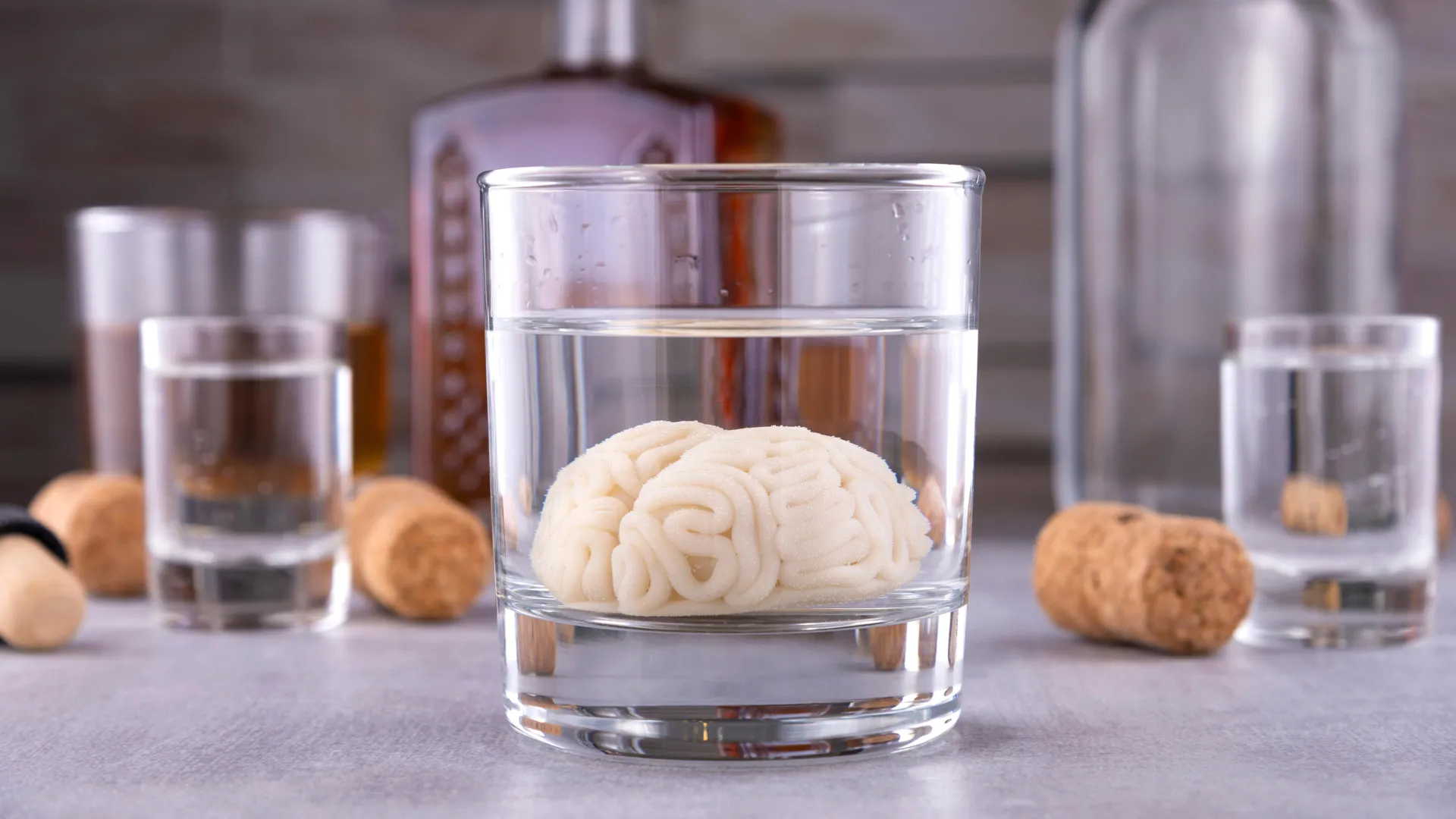
For some, abstaining from alcohol can subsequently increase compulsive drinking. Our research team found that, in abstaining mice, this urge to drink is preceded by changes in the activity of a particular brain region, pointing to potential new screening opportunities to identify and help those most vulnerable to relapse.
Although alcohol abstinence is associated with improved health outcomes, addiction researchers have theorized that brain changes that occur during abstinence may increase a person’s risk of relapse.
To explore this theory, we studied how mice behaved after giving them long-term voluntary access to alcohol followed by a forced abstinence period. We found that a subset of the mice developed aversion-resistant alcohol intake – that is, they now drank alcohol despite the quinine we added to make it increasingly bitter. Moreover, compared to those who did not experience forced abstinence, these mice drank even larger quantities of the very bitter alcohol. These results suggest there are potential bodily challenges associated with abstinence that contribute to relapses in alcohol use disorder.
Next, we monitored the activity of a particular collection of cells in a portion of the brain known as the bed nucleus of the stria terminalis, or BNST. Researchers have previously found this small structure to be heavily implicated in alcohol use disorder symptoms such as anxiety and depression.
We found that allowing abstinent mice to reenter the setting where alcohol was previously available would lead them to attempt to drink even though the spout contained only water. These attempts were associated with activity in the BNST. Abstinent mice who had developed the taste for very bitter alcohol had more than double the activity in this brain area compared to mice that did not experience forced abstinence.
Importantly, we saw activity in the BNST even before we gave abstinent mice access to the bitter alcohol. This finding suggests it might be possible to identify people who are at risk of relapsing by screening for BNST activity when someone is given access to alcohol.
Why it matters
Alcohol misuse is one of the top public health challenges in the United States. Although this condition is linked to a wide variety of negative health effects, the public chronically underestimates its seriousness.
Deaths associated with alcohol use in 2024 were 4.5 times higher than deaths attributed to opioids. While harm reduction – a major component of opioid use disorder treatment – is being explored in alcohol use disorder, abstinence remains a mainstay of most approaches to this addiction.
Over 80% of Americans age 12 and older consume alcohol at some point in their lives, and around 10% go on to experience alcohol use disorder. This 10% amounts to almost 30 million people in need of treatment.
Unfortunately, clinicians are ill-equipped to predict who will need help. Although there are treatments approved by the Food and Drug Administration for alcohol use disorder, the number of people diagnosed with this condition remains very high. In fact, those numbers have effectively doubled in the U.S. since 1999.
Developing better strategies for identifying those at risk of developing alcohol use disorder and helping them navigate treatment strategies may improve treatment.
What still isn’t known
It’s not clear the exact role that the BNST area of the brain plays in behavior related to alcohol use disorder. It’s also not clear what drives the increase in activity, or which specific populations of brain cells within the BNST encode this activity. Obtaining these answers could lead to new treatment targets.
What’s next
New tools in neuroscience have allowed researchers to manipulate the activity of specific neurons in mice brains. Using these strategies, our team is working on understanding the role BNST plays in drinking alcohol despite the harmful consequences.
Our colleague Jennifer Blackford is also investigating BNST activity in the brains of people with alcohol use disorder who are in early abstinence. If her team observes similar findings in people, a next step would be to further test using the BNST as a screening method in clinical trials.
Story Source:
Materials provided by The Conversation. Original written by Danny G. Winder and Marie Doyle. Note: Content may be edited for style and length.
Journal Reference:
- Marie A. Doyle, Hye Jean Yoon, Megan E. Altemus, Anika S. Park, Martha E. Troutman, Laura Grunenkovaite, Danielle N. Adank, Caitlyn M. Edwards, Nia A. Chetkovich, Sabrina D. Hallal, Louise Lantier, Cody A. Siciliano, Erin S. Calipari, Danny G. Winder. Alcohol abstinence precipitates alcohol seeking and aversion-resistant intake in association with increased BNST activity. Molecular Psychiatry, 2026; DOI: 10.1038/s41380-026-03660-x
Cite This Page:
The Conversation. "Quitting alcohol may prime the brain for relapse." ScienceDaily. ScienceDaily, 22 August 2026. . The Conversation. (2026, August 22). Quitting alcohol may prime the brain for relapse. ScienceDaily. Retrieved August 23, 2026 from www.sciencedaily.com/releases/2026/08/260822015148.htm The Conversation. "Quitting alcohol may prime the brain for relapse." ScienceDaily. www.sciencedaily.com/releases/2026/08/260822015148.htm (accessed August 23, 2026).Explore More
from ScienceDaily RELATED STORIES People Who Switched to Cannabis Drinks Cut Their Alcohol Use Nearly in Half Feb. 17, 2026 A new University at Buffalo study suggests cannabis-infused beverages could help some people cut back on alcohol. In a survey of cannabis users, those who drank cannabis beverages reported cutting ... Scientists Find Brain Circuit That Traps Alcohol Users in the Vicious Cycle of Addiction Oct. 6, 2025 Addiction often isn’t about chasing pleasure—it’s about escaping pain. Researchers at Scripps Research have discovered that a tiny brain region called the paraventricular nucleus of the ... Alcohol Use in Older Adults Doubles Risk of Brain Bleeds from Falls Aug. 8, 2024 Little is known about the association between the frequency of alcohol use and the severity of injuries sustained after a fall in older adults. A study of 3,128 older adults who underwent an initial ... Researchers Identify Brain Region Involved in Oxycodone Relapse July 9, 2024 Even years after they have recovered, a person who once struggled with alcohol or opioid addiction can relapse--and that relapse is more likely to occur during particularly stressful times. Now, ... Alcohol Raises Heart Disease Risk, Particularly Among Women Mar. 28, 2024 Young to middle-aged women who reported drinking eight or more alcoholic beverages per week--more than one per day, on average--were significantly more likely to develop coronary heart disease ... Study Identifies New Links Between REM Sleep Disturbances and Drug Relapse July 26, 2022 Relapse presents a major barrier to recovery from substance use disorders -- when people begin taking drugs such as cocaine again after a period of abstinence. Sleep disruptions have long been ... TRENDING AT SCITECHDAILY.comA 47-Year-Old Scientist Tracked Himself for Months – His Biological Age Fell to 32
Astronomers Detect a Record-Breaking “Cosmic Laser” From 8 Billion Light-Years Away
Almost All Plant-Based Meat Alternatives Contain Mycotoxins, Study Finds
Just 4 Minutes of Daily Strength Training Can Quadruple Fitness in Older Adults
Print Email ShareBreaking
this hour- A Tiny Big Bang Leaves a Strange Clue
- A Hidden “On Switch” in Human DNA
- Burn Fat Without Losing Muscle
- Vitamin D Linked to Better Cognition
- Black Holes Keep Tearing These Stars Apart
- 400-Year-Old Shark Eyes Defy Aging
- Speaking More Languages May Slow Aging
- JWST Finds Hidden Mass in Early Galaxies
- Natural Supplement May Boost Cancer Immunity
- Queen Bees Pass Pesticides to Their Eggs
Trending Topics
this week HEALTH & MEDICINE Pharmacology Workplace Health Nutrition MIND & BRAIN Intelligence Perception Behavior LIVING & WELL Nutrition Behavior Gender DifferenceStrange & Offbeat
HEALTH & MEDICINE This Shark Can Live 400 Years. Its Eyes Barely Seem to Age Tooth Count May Predict Survival After Pancreatic Cancer Surgery This Gut Microbe May Help Keep You Strong as You Age MIND & BRAIN Mysterious Waves Sweeping Across Your Brain May Help Turn Sensory Chaos Into What You See Ozempic May Have Revealed the Brain’s Hidden “craving Center” The Adult Brain Can Repair Itself Better Than Scientists Thought LIVING & WELL COVID-19 Awakens Dormant Viruses — and One Is Linked to Long COVID When Gut Microbes Run Low on Fiber, They May Start Eating You Scientists Say Just 7 Days of Meditation Can Rewire Your Brain\n